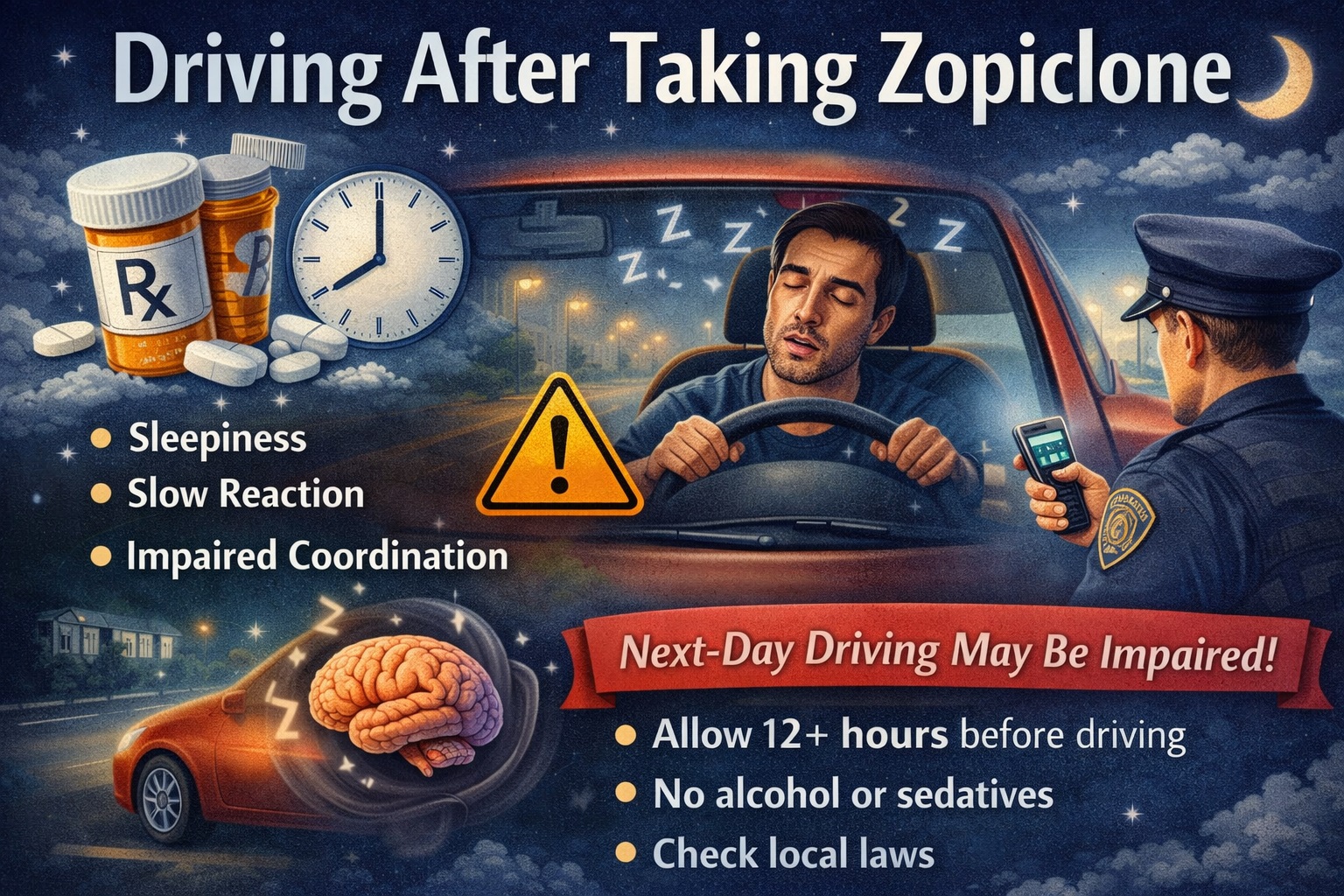
Many people prescribed zopiclone are concerned about one very practical question: Is it ok when driving after taking zopiclone? This concern is valid. Zopiclone is a hypnotic sedative designed to promote sleep, and like all medicines that affect the central nervous system, it can influence alertness, reaction time, and coordination.
At Zopisign, we approach this topic carefully and without alarmism. Understanding when driving may be unsafe, who is at higher risk, and how to reduce harm is essential for anyone using zopiclone.
Why driving after zopiclone can be risky
Zopiclone works by enhancing inhibitory brain signals that reduce wakefulness. While this effect is intended to support sleep, it does not always end precisely when you wake up.
Some people experience residual next-day effects, sometimes described as “hangover sedation.” These effects may include slowed reaction time, reduced concentration, impaired judgment, or poor coordination—all of which are directly relevant to driving.
An NHS safety overview explains that zopiclone can affect concentration and coordination the next day, particularly if sleep duration was insufficient or the dose was too high.
How long zopiclone can impair driving ability
Zopiclone has a relatively long half-life compared with some other sleeping pills. This means that measurable drug levels may still be present in the body the morning after use.
In clinical practice, patients are often advised not to drive or operate machinery for at least 12 hours after taking zopiclone. Even after this window, impairment may persist in some individuals, especially those who are sensitive to sedatives.
A controlled study reviewed on PubMed found that zopiclone can impair driving performance the morning after nighttime dosing, with effects comparable to alcohol at legally significant levels.
Factors that increase risk of driving after taking zopiclone
Not everyone experiences next-day impairment to the same degree. Risk is higher if any of the following apply:
- Higher doses, such as 7.5 mg, especially in new users
- Short sleep duration (for example, fewer than 7–8 hours in bed)
- Older age
- Concurrent use of alcohol or other sedatives
- Liver impairment or slower drug metabolism
Clinical context for commonly discussed dosing can be found in the Zopisign overview of zopiclone 7.5 mg use.
Legal and regulatory considerations
Driving after taking zopiclone can have legal consequences if impairment is demonstrated. In some jurisdictions, zopiclone is classified alongside other drugs that may render a person unfit to drive.
The UK government’s drug-driving guidance lists zopiclone as a medicine that may impair driving and advises patients not to drive if they feel drowsy, dizzy, or unable to concentrate.
Even where no specific blood-limit law applies, responsibility still rests with the driver to ensure they are fit to drive.
What patients are usually advised in practice
In everyday prescribing, clinicians often give practical guidance such as:
- Take zopiclone only when you can allow a full night’s sleep
- Do not drive the next morning until you are confident you feel fully alert
- Never combine zopiclone with alcohol if you plan to drive the following day
- Avoid driving entirely during the first few days of treatment
If you are new to the medication, reviewing the general zopiclone safety profile on the Zopisign guide to zopiclone use and precautions can help frame expectations.
Brand, formulation, and tolerability considerations
Different formulations may contain varying inactive ingredients, which can influence how a medication is tolerated. While this does not change the core pharmacological risk related to driving, it may affect side effects such as dizziness or grogginess in sensitive individuals.
For readers interested in formulation details, the Zopisign resource on inactive ingredients in zopiclone products provides neutral background information.
Manufacturing standards and regulatory oversight are also discussed in the Zopisign overview of approved zopiclone manufacturers.
A realistic clinical scenario
A patient takes zopiclone at 11 p.m. after several nights of poor sleep. They wake at 6 a.m. feeling “mostly fine” but slightly slowed. Although not overtly drowsy, their reaction time is subtly impaired.
In clinical practice, many prescribers would advise not driving that morning, particularly if the drive involves traffic, long distances, or safety-sensitive tasks. This conservative approach prioritizes public and personal safety.
Key safety takeaways
- Zopiclone can impair driving ability the next day
- Risk is highest with higher doses, short sleep, and alcohol use
- Waiting at least 12 hours is often advised, but may not be sufficient for everyone
- If you feel drowsy, slowed, or unfocused, do not drive
When in doubt, erring on the side of caution is the safest option.
Medical disclaimer
This article is for informational purposes only and does not replace medical or legal advice. Individual responses to zopiclone vary. Always follow your prescriber’s instructions and local driving regulations, and consult a healthcare professional if you are unsure about your fitness to drive.