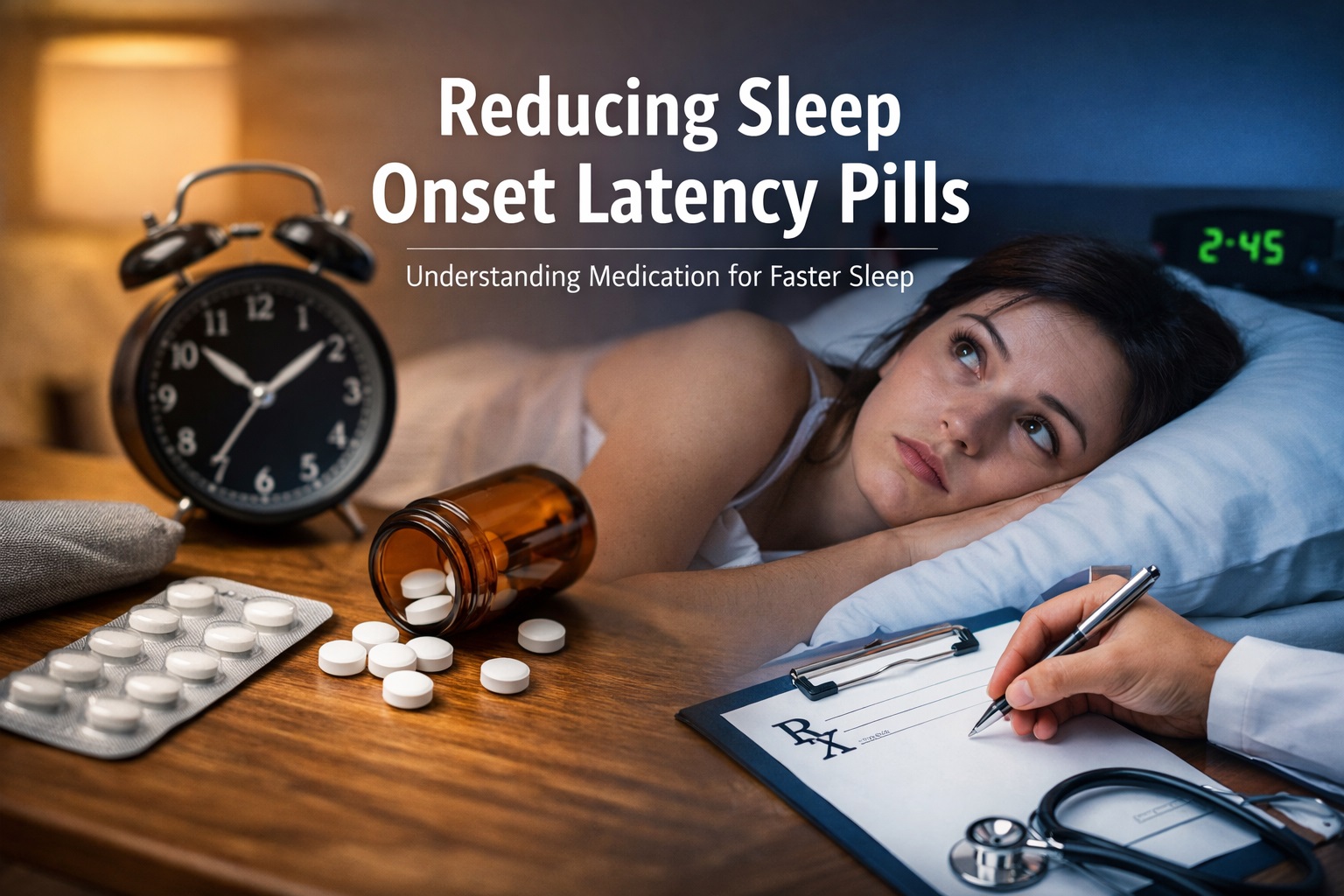
When you’re exhausted but still can’t “switch off,” it can feel like your brain is fighting bedtime. Clinicians call this prolonged sleep onset latency—the time it takes to fall asleep stretching well beyond what feels normal for you. For some people, targeted short-term medication can help, but it’s only one part of a safe plan.
At Zopisign, we focus on clear, medically responsible information about zopiclone, Zopisign, and related sleep medicines. This article explains how sleep-onset pills may be used, what “good candidates” look like, and how to think about benefits versus risks in real life.
What “sleep onset latency” actually means
Sleep onset latency (SOL) is the minutes between “lights out” and actual sleep. Many adults fall asleep in roughly 10–20 minutes, but that range varies with stress, timing, caffeine, and sleep debt.
If you regularly find it hard to go to sleep and it affects daytime functioning, that fits a common insomnia symptom pattern described on the NHS insomnia overview page (symptoms include difficulty getting to sleep and daytime tiredness). Here is the deep-linked reference embedded in the claim: NHS insomnia symptoms.
A key point: SOL is a symptom, not a diagnosis. The job is to figure out why it’s happening.
When are pills used to reduce sleep onset latency?
Sleep-onset pills are usually considered when:
- You’re struggling to fall asleep most nights for weeks
- Daytime fatigue, irritability, or impaired concentration is building
- Practical measures (routine, caffeine timing, screen/light exposure, CBT-I tools) haven’t been enough
- The insomnia is severe enough that short-term relief could help you reset
In clinical practice, zopiclone is often prescribed when a short, time-limited course is needed—particularly during acute stress, travel disruption, or temporary health changes. It is not typically positioned as a “forever” solution.
How zopiclone fits into “sleep-onset” treatment
Zopiclone is commonly grouped with “Z-drugs,” a family of prescription hypnotics. Clinically, it may help with:
- Falling asleep faster (sleep onset)
- Staying asleep (sleep maintenance), depending on the person and dose timing
If your main issue is waking repeatedly after initially falling asleep, your clinician may evaluate whether the same medicine—and timing—matches your pattern. If you’re researching brand and formulation differences.
Timing matters more than most people expect
Even when a medication is appropriate, how it’s taken can change results.
Practical rule used in prescribing: take a sleep-onset hypnotic only when you can commit to a full night’s sleep (often 7–8 hours), and only when you are already in a wind-down period. Taking it and then scrolling a phone, eating a heavy meal, or doing stimulating tasks may blunt the intended effect.
If you’re looking at common dose discussions, the overview page for the standard strength is Zop 7.5 information.
Typical dosing approach for sleep onset support
Dosage is individualized and depends on age, liver function, other medications, and sensitivity to sedation.
A common real-world prescribing pattern is:
- Lower starting doses for older adults or people prone to next-day grogginess
- Shortest duration that still helps stabilize sleep
- Planned stop or taper strategy if used beyond a brief window
Benefits you might notice—and what they don’t mean
People who respond well often describe:
- Less “clock-watching” at bedtime
- A smoother transition into sleep
- Reduced anxiety about falling asleep (because the pattern improves)
But a better night does not automatically mean the underlying cause is solved. If insomnia is driven by anxiety, pain, reflux, sleep apnea, restless legs, or shift-work timing, pills may reduce SOL temporarily while the root issue continues.
Safety: next-day impairment is a real concern
The most important safety issue with sleep medicines is what happens after you wake up—especially driving, operating machinery, or making high-stakes decisions.
The FDA has warned that eszopiclone (Lunesta), a closely related sleep medicine, can cause next-day impairment and that higher doses increase that risk; the agency also lowered the recommended starting dose to reduce next-day effects. Here is the deep-linked FDA Drug Safety Communication supporting that single primary claim: FDA warns of next-day impairment with Lunesta (eszopiclone).
While that FDA communication is specific to eszopiclone, the broader clinical takeaway is relevant when discussing hypnotics as a category: if you feel impaired the next morning, your regimen needs reassessment.
Who should be cautious—or avoid sleep-onset pills
Clinicians tend to be especially cautious when a patient has:
- Possible sleep apnea or breathing-related sleep disorders
- Significant liver disease (drug clearance may be slower)
- A history of substance misuse
- Concurrent sedatives (including alcohol, opioids, or some anti-anxiety medicines)
- Pregnancy or breastfeeding, unless a clinician determines benefits outweigh risks
If there’s any concern about breathing pauses at night, loud snoring, or unexplained daytime sleepiness, evaluation for sleep-disordered breathing should happen before relying on sedatives.
Side effects people commonly report
Not everyone experiences side effects, but common ones include:
- Metallic or bitter taste
- Dry mouth
- Dizziness
- Morning grogginess (especially if sleep time was short)
Less common but clinically important effects can include confusion, falls (especially in older adults), and unusual nighttime behaviors. Any concerning effect is a reason to stop and contact a clinician promptly.
Zopiclone vs eszopiclone (Lunesta): how patients should compare them
Patients often ask how these medicines compare. The honest answer is that the “best” option depends on:
- Your main symptom (sleep onset vs sleep maintenance vs both)
- Your age and risk of next-day impairment
- Other medications and medical history
- Local prescribing norms and availability
Cost considerations also vary by country and healthcare system. If you’re comparing price drivers and patient affordability factors.
A short clinical scenario to make it concrete
A 39-year-old caregiver develops sleep-onset insomnia during a stressful month. They fall asleep 60–90 minutes after going to bed, then feel depleted at work. They improve caffeine timing, build a consistent wind-down routine, and try a CBT-I self-help program, but SOL remains prolonged.
A clinician prescribes a brief, low-dose course of a hypnotic with a clear stop plan, emphasizing: no alcohol, protect a full sleep window, and stop if morning impairment occurs. Over 1–2 weeks, SOL shortens, and medication is discontinued as routines stabilize.
This kind of time-limited use—paired with behavioral steps—is the pattern many clinicians aim for when medication is appropriate.
Don’t skip the non-drug foundation
Even if you use a pill short-term, the most durable improvements usually come from:
- Fixed wake time (even after a rough night)
- Morning light exposure
- Earlier caffeine cutoff
- A consistent wind-down routine
- CBT-I principles (stimulus control, sleep window planning, cognitive strategies)
If insomnia persists, it’s often worth re-checking for hidden contributors like anxiety disorders, chronic pain, reflux, thyroid issues, medication side effects, or circadian rhythm mismatch.
Bottom line: medication can be a bridge, not the destination
Sleep-onset pills may reduce the time it takes to fall asleep in carefully selected cases, but they are not risk-free. The safest approach is clinician-guided, short-term use with attention to next-day impairment, interactions, and the underlying cause of insomnia.
For broader educational resources and condition-specific navigation, visit Zopisign.org and the core explainer zopiclone information page.