Your cart is currently empty!
For many people living with chronic insomnia, Lunesta® (eszopiclone) has long been a recognizable name. Yet in everyday clinical conversations, cost — not efficacy — is often the deciding factor. As we move through 2026, patients and caregivers are asking a practical question: How much does generic Lunesta really cost now, and why does the price vary so widely? This guide provides a clear, evidence-based look at generic Lunesta cost in 2026, written in a neutral, professional voice and grounded in verified regulatory sources.
Understanding Generic Lunesta (Eszopiclone)
Generic Lunesta is sold under its chemical name, eszopiclone, and belongs to the class commonly referred to as Z-drugs. These medications are prescribed primarily for sleep-onset and sleep-maintenance insomnia.
From a regulatory standpoint, generic eszopiclone is considered therapeutically equivalent to the brand-name product. The U.S. Food and Drug Administration (FDA) confirms this equivalence through its Orange Book listings, which require generics to meet the same standards for quality, strength, and bioavailability as the original drug.
According to the FDA’s drug equivalence documentation for eszopiclone tablets, approved generics must demonstrate bioequivalence to Lunesta® before entering the market .
Average Cost of Generic Lunesta in 2026
Typical Cash Prices (U.S.)
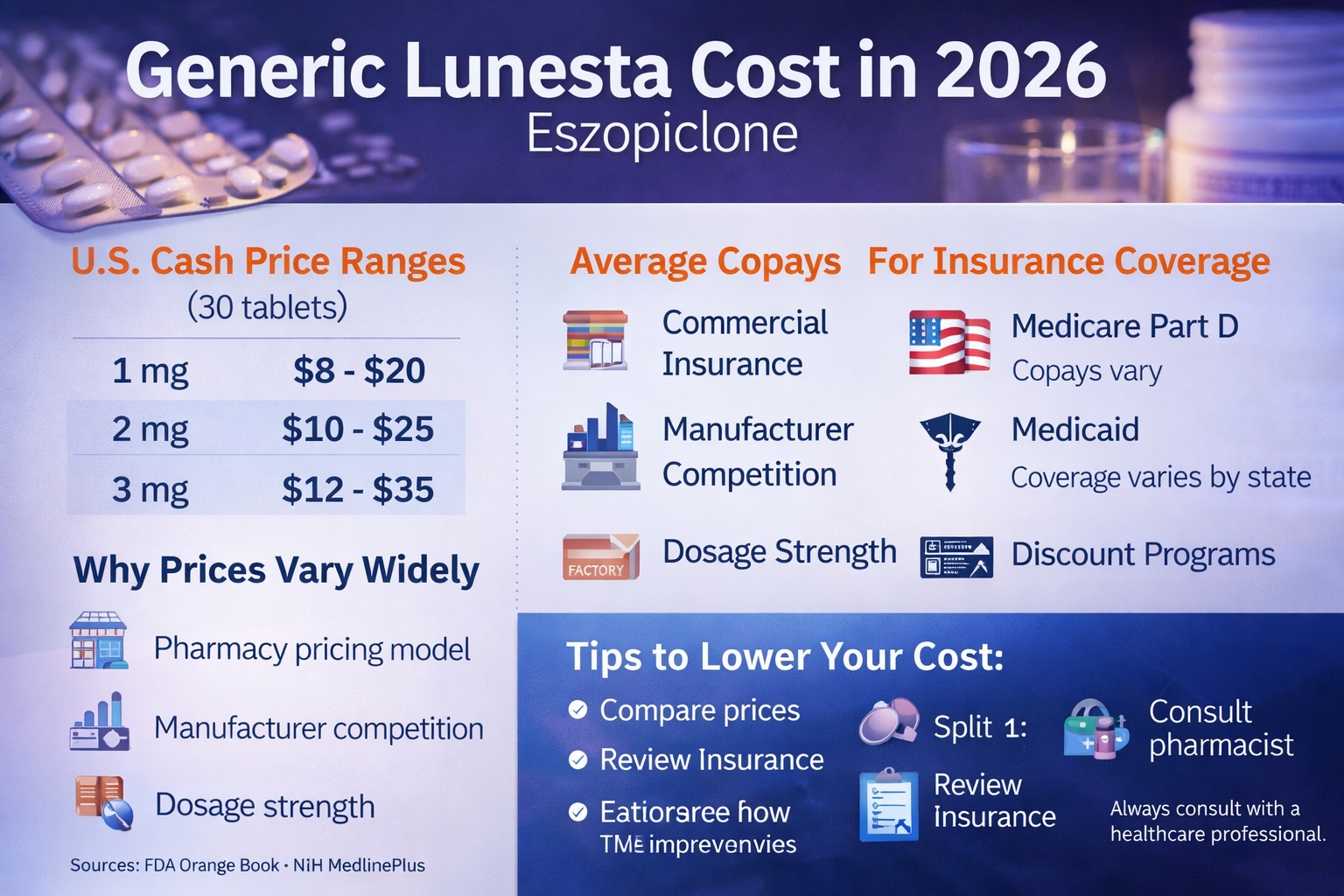
In 2026, cash prices for generic eszopiclone (Hypnite) the United States typically fall within these broad ranges:
| Dosage (30 tablets) | Estimated Cash Price |
|---|---|
| 1 mg | $25 – $40 |
| 2 mg | $30 – $50 |
| 3 mg | $45 – $55 |
These figures reflect out-of-pocket pharmacy pricing without insurance. They can vary significantly depending on location, pharmacy chain, and manufacturer availability.
In clinical practice, we often observe that patients are surprised by how dramatically prices differ between pharmacies — sometimes by more than 300% for the same dosage.
Why Generic Lunesta Prices Vary So Much
1. Pharmacy Pricing Models
Retail pharmacies use different acquisition costs and pricing strategies. Independent pharmacies may charge more than large chains, while warehouse or supermarket pharmacies may price lower to drive foot traffic.
2. Manufacturer Competition
Eszopiclone is produced by multiple FDA-approved manufacturers. When fewer suppliers are active, prices tend to rise; when competition increases, prices stabilize or fall.
3. Dosage Strength
Higher strengths (especially 3 mg tablets) typically cost more, even when the pill count is identical.
4. Discount Programs and Coupons
Third-party prescription discount programs can significantly reduce prices, though these discounts are not insurance and may change monthly.
Insurance Coverage in 2026
Commercial Insurance
Most U.S. commercial insurance plans cover generic eszopiclone. In many cases, patient copays range from $0 to $15 per month, depending on the plan’s formulary tier.
Medicare Part D
Generic Lunesta is commonly included in Medicare Part D formularies. However, copays may fluctuate during different coverage phases (deductible, initial coverage, coverage gap).
Medicaid
Coverage policies vary by state. Some Medicaid programs require prior authorization or step therapy, particularly for long-term use.
International Perspective: Is Generic Lunesta Cheaper Elsewhere?
Outside the U.S., eszopiclone pricing is often lower due to national price regulation. For example:
- United Kingdom: Eszopiclone is rarely prescribed; alternative hypnotics are preferred under NHS guidance.
- European Union: Pricing varies by country, but generics are typically capped through national reimbursement systems.
It’s important to note that importing prescription medications across borders may be illegal or unsafe without proper authorization.
Safety and Clinical Context
Cost should never be the only consideration when choosing a sleep medication. According to the U.S. National Library of Medicine’s MedlinePlus monograph on eszopiclone, the drug may cause next-day impairment, unusual sleep behaviors, and dependency with prolonged use .
In real-world practice, clinicians frequently reassess eszopiclone use after several weeks, especially in older adults, due to fall risk and cognitive side effects.
Alternatives That May Affect Cost Decisions
Some patients explore alternatives when cost or tolerability becomes an issue:
- Behavioral therapy for insomnia (CBT-I)
- Melatonin (regulated as a supplement, not a drug)
- Other generic hypnotics (e.g., zolpidem)
Each alternative has distinct cost and safety profiles, and decisions should always be made with a healthcare professional.
How to Lower Your Out-of-Pocket Cost in 2026
Practical strategies many patients use include:
- Comparing prices across multiple local pharmacies
- Asking prescribers about tablet splitting when clinically appropriate
- Reviewing insurance formularies annually
- Avoiding long-term refills without reassessment
In many cases, a brief conversation with a pharmacist can reveal lower-cost options that are not advertised.
Key Takeaways
- Generic Lunesta (eszopiclone) remains widely available and affordable in 2026.
- Typical U.S. cash prices range from $8 to $35 for a 30-day supply.
- Insurance coverage is common, but copays vary.
- FDA and NIH sources confirm therapeutic equivalence and outline safety considerations.
- Cost decisions should always be balanced with clinical oversight.