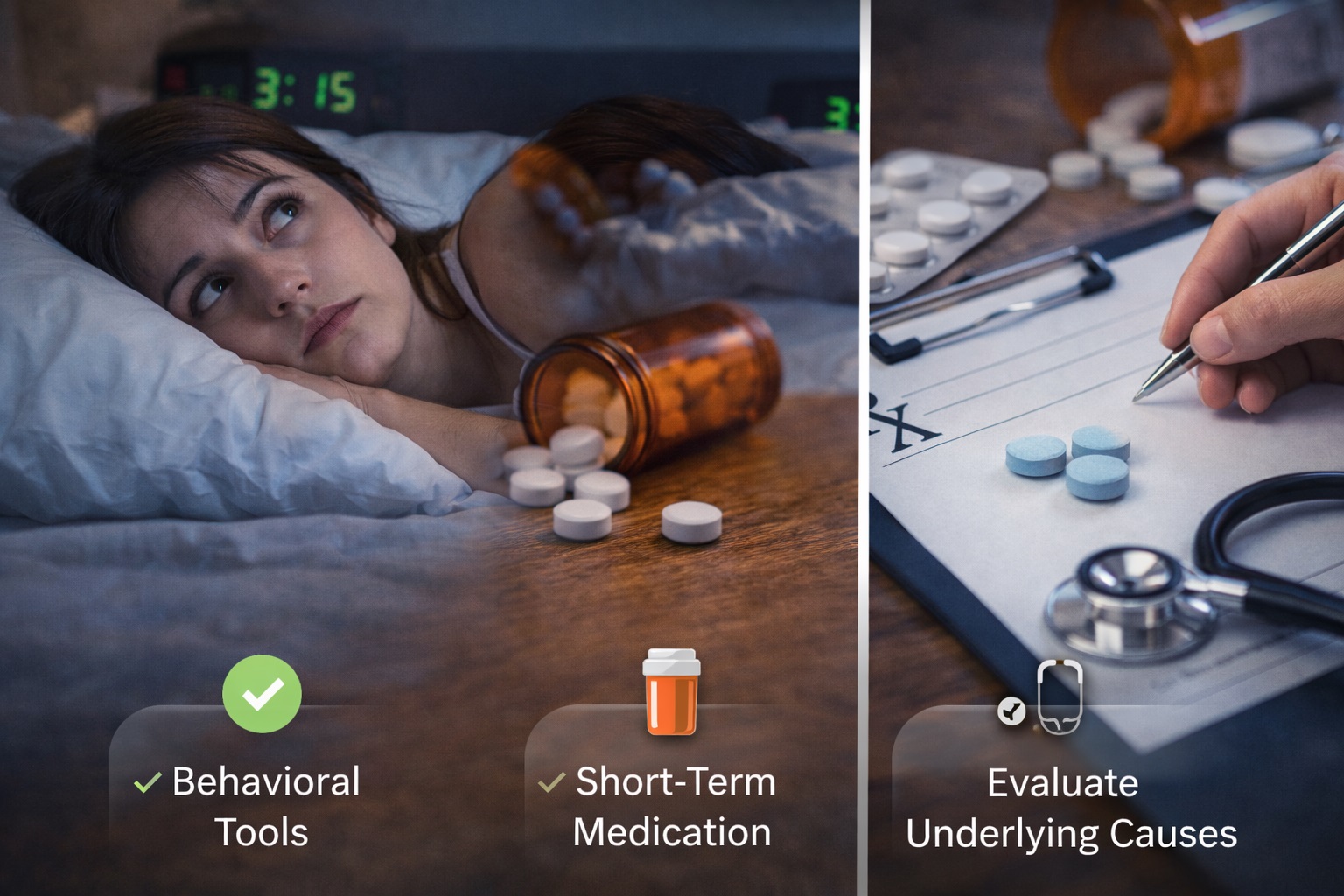
Short-term insomnia—often triggered by stress, illness, travel, or sudden life changes—can feel overwhelming. When sleep disruption lasts days to a few weeks, many patients wonder whether medication is necessary or whether behavioral strategies alone are enough.
At Zopisign, we present medically grounded, non-promotional information to help patients understand how clinicians typically approach short-term insomnia treatment. The goal is always safe, time-limited intervention with attention to underlying causes.
What Is Short-Term (Acute) Insomnia?
Short-term insomnia generally refers to difficulty falling asleep, staying asleep, or waking too early for a limited period—often less than three months and frequently tied to a specific stressor.
The diagnostic framework for insomnia disorder is described by the American Academy of Sleep Medicine (AASM) in its clinical practice guideline for pharmacologic treatment of chronic insomnia: AASM Clinical Practice Guideline for Insomnia. While this guideline focuses on chronic insomnia, it provides foundational definitions and therapeutic principles relevant to short-term presentations.
Acute insomnia is common. The key question is not only how to sleep tonight, but also why sleep has changed.
Step 1: Identify and Address the Trigger
In clinical settings, the first step is usually a focused evaluation:
- Recent stress or anxiety?
- Shift work or jet lag?
- Pain, reflux, or illness?
- Medication changes?
- Increased caffeine or alcohol use?
Short-term insomnia often resolves once the trigger stabilizes. For this reason, clinicians generally avoid immediately jumping to long courses of sedative medication.
For a foundational overview of sleep medications discussed in this context, see Zopisign.
Step 2: Non-Pharmacologic Interventions First
Most short-term insomnia treatment guidelines recommend behavioral strategies before—or alongside—medication.
Common first-line measures include:
- Fixed wake time (even after a poor night)
- Avoiding daytime naps
- Limiting caffeine after midday
- Reducing evening screen exposure
- Using the bed only for sleep (stimulus control)
- Wind-down routines 30–60 minutes before bed
These approaches are part of cognitive behavioral therapy for insomnia (CBT-I), which remains the gold standard for persistent insomnia.
Even in short-term cases, strengthening sleep behaviors reduces the risk of symptoms becoming chronic.
Step 3: When Short-Term Medication Is Considered
Medication may be considered when:
- Sleep loss is severe and impairing daily functioning
- Stress-related insomnia is intense but expected to resolve
- Behavioral measures alone are insufficient
- A brief reset may prevent chronic insomnia
The American College of Physicians recommends cognitive behavioral therapy as initial treatment for chronic insomnia and emphasizes cautious, time-limited use of medication when necessary: ACP Clinical Guideline on Insomnia Treatment.
Although this recommendation focuses on chronic insomnia, the cautious medication principle applies even more strongly in short-term cases.
Common Medication Options for Short-Term Use
Several classes may be prescribed for acute insomnia, depending on patient profile:
1. Non-benzodiazepine Hypnotics (“Z-drugs”)
These include medications such as zopiclone and eszopiclone. They may help reduce sleep onset latency and improve sleep continuity.
In clinical practice, zopiclone is often prescribed when short-term sleep support is needed, typically for days to a few weeks rather than months.
2. Short-Acting Benzodiazepines
Sometimes used in specific cases, though generally with greater caution due to dependence potential.
3. Melatonin or Circadian-Targeted Agents
May be considered in cases involving jet lag or circadian rhythm shift rather than stress-induced insomnia.
Duration: How Long Is “Short-Term”?
Short-term pharmacologic treatment is typically:
- A few nights to two weeks
- Occasionally up to four weeks under supervision
Prolonged nightly use increases the risk of tolerance, dependence, and rebound insomnia when stopped.
Clinicians commonly use the principle: lowest effective dose, shortest necessary duration.
If reviewing common adult strengths of zopiclone discussed in short-term treatment, see Zop 7.5 information.
Safety Considerations in Acute Treatment
Even short-term hypnotic use requires attention to:
- Next-day impairment
- Falls risk (especially in older adults)
- Interaction with alcohol or opioids
- Underlying breathing disorders (e.g., sleep apnea)
The FDA has issued warnings regarding next-day impairment with certain hypnotics, underscoring the importance of appropriate dosing and reassessment: FDA Drug Safety Communication on eszopiclone.
Any confusion, unusual behavior, or persistent morning sedation should prompt medical review.
Preventing Acute Insomnia from Becoming Chronic
A common pattern seen in practice:
- Stress triggers poor sleep.
- Anxiety about sleep develops.
- Irregular sleep schedules worsen the cycle.
- Insomnia becomes self-sustaining.
Early behavioral correction reduces this risk.
Short-term medication may reduce acute distress, but lasting recovery depends on:
- Stabilizing wake times
- Managing stress
- Avoiding compensatory oversleeping
- Addressing medical contributors
When to Seek Further Evaluation
Short-term insomnia should prompt reevaluation if:
- It lasts more than several weeks
- Daytime functioning declines significantly
- Snoring and breathing pauses are reported
- Mood symptoms worsen
- Pain or medical conditions are suspected
In such cases, a broader sleep assessment may be necessary.
Practical Clinical Perspective
In real-world care, short-term insomnia treatment is individualized:
- A caregiver facing temporary stress may benefit from brief hypnotic support.
- A traveler with jet lag may need circadian adjustment strategies.
- A patient with anxiety may require targeted anxiety treatment rather than sedatives alone.
Medication can be a bridge—but not the sole strategy.
For additional educational resources on sleep medications and formulations, visit Zopisign.org.
Final Thoughts
Short-term insomnia treatment guidelines emphasize:
- Identify and address triggers
- Prioritize behavioral interventions
- Use medication cautiously and briefly
- Monitor safety and next-day effects
- Reassess if symptoms persist
Sleep is complex. Responsible treatment balances relief with long-term health.